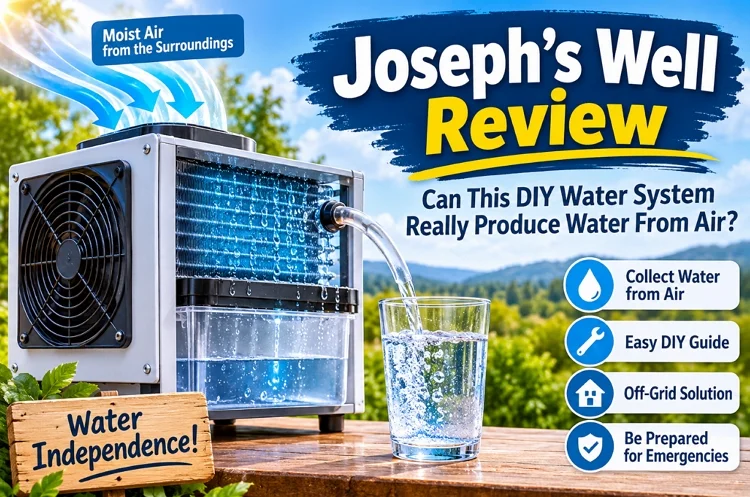
Joseph’s Well Review: Can This DIY Water System Really Produce Water From Air?
Access to clean water is something most people rarely think about until a shortage, drought, or unexpected emergency makes it difficult to obtain. As more homeowners explore emergency preparedness, off-grid living, and alternative water sources, innovative ideas for collecting water are attracting attention.
One product gaining interest in this space is Joseph’s Well, a DIY water-from-air system promoted through US Water Revolution. Instead of purchasing an expensive, ready-made atmospheric water generator, the program claims to show people how to build their own system using commonly available components.
But what exactly is Joseph’s Well? Is it a physical machine, or is it an instructional guide? How does the technology work, and what should potential buyers know before spending money on it?
In this Joseph’s Well review, we’ll examine the product, its advertised features, how atmospheric water generation works, its potential advantages, and the limitations worth considering before making a decision.
Affiliate Disclosure: This article contains affiliate links. We may earn a commission if you purchase through our link, at no additional cost to you.
Explore the official offer and review the product details before purchasing.
What Is Joseph’s Well?
Joseph’s Well is a digital DIY program designed to teach users how to build an atmospheric water generator at home.
Rather than shipping a complete water-producing appliance, the program provides instructional materials intended to guide customers through assembling their own system. The concept is based on collecting moisture from the surrounding air and converting it into liquid water through condensation.
According to the official US Water Revolution sales page, the program is designed for homeowners, families, and people interested in becoming more independent from traditional water infrastructure.
The project also targets people interested in emergency preparedness, rural living, and alternative energy solutions.
The important distinction is that you’re purchasing instructions and building plans, not a finished water generator. You’ll still need to obtain the required components and assemble the system yourself.
How Does Joseph’s Well Work?
The basic idea behind Joseph’s Well is atmospheric water generation, a technology that collects moisture naturally present in the air.
Although the marketing may make the concept sound unusual, atmospheric water harvesting is an established area of research and engineering.
A typical condensation-based system works through several basic stages:
- Air intake: A fan draws surrounding air into the system.
- Cooling: The air passes over a cooled surface that lowers its temperature.
- Condensation: When the surface temperature falls below the air’s dew point, water vapor condenses into liquid droplets.
- Collection: The resulting water is directed into a collection container.
- Water treatment: Appropriate filtration and disinfection steps are needed before the collected water can be considered suitable for drinking.
Joseph’s Well claims to explain how to build a homemade system using this general principle.
However, the actual performance of any atmospheric water generator depends on its design, components, operating conditions, and available power.
What Do You Get With the Joseph’s Well Program?
According to the official product presentation, the Joseph’s Well package includes several educational resources intended to make the building process easier to follow.
Here’s an overview of the advertised materials.
1. Step-by-Step Video Instructions
The main component is a video guide that explains the construction process.
The goal is to walk users through the different stages of assembling their own atmospheric water generator rather than leaving them to figure everything out independently.
2. Printable Blueprints and Schematics
The package also advertises printable blueprints and diagrams.
These materials are intended to help users understand how the different components fit together and how the system is supposed to operate.
3. Materials List
Another advertised feature is a materials list that identifies the components needed for the project.
This can be useful when planning a DIY build, although actual availability and prices may vary depending on your location.
4. On-Grid and Off-Grid Instructions
Joseph’s Well also promotes instructions for different power configurations.
The official presentation describes both conventional electricity and an alternative solar-powered setup.
This may appeal to people who are interested in off-grid projects or want to explore backup power options.
5. Three Additional Bonus Guides
The advertised package includes three additional educational resources:
- How to Secure Your Water Reserves.
- How to Purify and Mineralize Water.
- The Deadly Agents Hidden in Your Water.
These materials focus on water storage, treatment, and understanding possible contaminants.
Keep in mind that the exact package contents should always be confirmed on the checkout page before purchasing.
Joseph’s Well Main Features and Potential Benefits
There are several reasons why a DIY atmospheric water project may attract attention.
Here are some of the main benefits associated with the Joseph’s Well concept.
Learn About Atmospheric Water Generation
The program introduces users to a technology that many people may not have explored before.
For someone interested in DIY engineering, condensation, and alternative water collection methods, the educational aspect could be valuable.
Explore Alternative Water Sources
Having more than one potential water source can be useful when planning for unexpected interruptions.
A properly designed and tested atmospheric water generator could potentially supplement other household water arrangements.
However, it should not replace a reliable primary water supply or established emergency water storage.
Explore Off-Grid Possibilities
The advertised solar-power instructions may interest people who enjoy building independent energy systems.
Combining renewable electricity with water-generation technology is an interesting concept, although the required solar capacity, battery storage, and operating costs need to be evaluated carefully.
A DIY Learning Experience
Joseph’s Well is presented as a project that people can follow without being professional engineers.
The videos and diagrams are intended to make the process more accessible to beginners.
Nevertheless, anyone working with electrical components, cooling systems, or water-treatment equipment should understand the relevant safety requirements.
Digital Access
Since the main product is a digital program, customers do not need to wait for a completed machine to be shipped.
The advertised materials are delivered digitally, allowing buyers to review the instructions before sourcing the components.
How Much Water Can Joseph’s Well Produce?
This is probably the most important question for anyone considering the program.
The official sales page uses a headline advertising up to 50 gallons of water per day in its promotional presentation. However, its FAQ section gives a different figure, stating that the described setup can produce up to 10 gallons per day.
This difference is worth paying attention to.
Neither figure should be treated as an independently verified production result for every user or environment.
Atmospheric water generation depends heavily on several factors:
- Relative humidity in the surrounding air.
- Ambient temperature.
- Cooling capacity and system design.
- Airflow and component efficiency.
- Available electricity.
- Maintenance and operating conditions.
Research into atmospheric water harvesting confirms that environmental conditions can significantly affect both water production and energy consumption.
For example, a system operating in warm, humid air may perform very differently from one operating in a dry environment.
Therefore, anyone interested in Joseph’s Well should evaluate its production claims carefully and avoid assuming that the advertised maximum will be achieved in their location.
Is Joseph’s Well Suitable for Off-Grid Living?
Off-grid living is one of the main areas where the Joseph’s Well concept may attract attention.
People living in rural properties, cabins, or locations with limited infrastructure often explore alternative ways to manage essential resources.
The program advertises instructions for using a solar-powered configuration, which could be interesting for people already familiar with solar panels and battery systems.
However, there are practical considerations.
A condensation-based water generator requires energy to move air and create the temperature difference needed for condensation. Solar operation does not automatically mean that the system can operate continuously without sufficient power generation and storage.
Before attempting an off-grid installation, consider:
- The electrical requirements of the components.
- Solar panel capacity.
- Battery storage requirements.
- Expected operating hours.
- Seasonal changes in humidity and temperature.
- Maintenance and replacement costs.
These factors will help determine whether the project is practical for your particular property.
Is Water Produced From Air Safe to Drink?
Water quality is an especially important consideration with any homemade water collection system.
Although atmospheric moisture can be condensed into liquid water, that does not automatically mean the collected water is safe for drinking.
Airborne particles, contaminants on cooling surfaces, collection containers, tubing, and other system components can affect water quality.
For that reason, filtration, disinfection, proper maintenance, and appropriate water testing should be considered essential parts of any drinking-water setup.
The US Centers for Disease Control and Prevention provides guidance on water quality and treatment, emphasizing that untreated water can contain harmful microorganisms and chemicals.
You can learn more from the CDC’s official guidance:
CDC – Collecting Rainwater and Your Health
CDC – Guidelines for Treating Well Water
These resources discuss other water sources, but the underlying safety principle remains important: water should not be assumed safe simply because it looks clear.
Before drinking water produced by a homemade atmospheric system, use appropriate treatment methods and have the water tested by a qualified laboratory.
Joseph’s Well Pros and Cons
Before deciding whether this program is worth considering, it’s helpful to look at its potential advantages and limitations.
Potential Advantages
- Provides a structured introduction to atmospheric water generation.
- Includes advertised video instructions.
- Offers printable blueprints and schematics.
- Includes a materials list.
- Covers both conventional and solar-powered configurations.
- Includes additional educational guides about water storage and treatment.
- Provides digital access rather than requiring shipment of a completed appliance.
Potential Disadvantages
- It is a digital guide, not a ready-to-use water generator.
- Buyers must purchase the required components separately.
- Actual construction costs may vary.
- Water production is dependent on local climate conditions and system performance.
- Electricity and ongoing maintenance may be required.
- The advertised production figures have not been independently verified for the specific DIY design.
- Water treatment and testing require additional attention.
Understanding these limitations is important because the program may be more suitable for a hands-on DIY enthusiast than someone looking for an immediate household water solution.
How Much Does Joseph’s Well Cost?
According to the official sales page reviewed for this article, Joseph’s Well was advertised for a one-time payment of $67.
The price and available purchasing options may change, so it’s worth checking the current offer before making a decision.
It’s also important to remember that the advertised program price does not necessarily cover the complete cost of building the system.
You’ll need to budget separately for components, electrical equipment, possible solar hardware, water-treatment supplies, and any replacement parts.
For a realistic comparison, consider the total project cost rather than looking only at the price of the digital guide.
Does Joseph’s Well Offer a Money-Back Guarantee?
The official presentation advertises a 60-day Peace-of-Mind Guarantee.
According to the sales page, customers who are not satisfied can request a refund within the advertised period.
Before ordering, review the current refund conditions and purchasing terms carefully.
Also, keep your order confirmation and any relevant transaction information in case you need to contact customer support.
Who Should Consider Joseph’s Well?
Joseph’s Well may be worth researching for people who enjoy practical DIY projects and want to learn more about alternative water-generation technology.
It may be particularly interesting for:
- Homeowners interested in emergency preparedness.
- DIY enthusiasts who enjoy building practical equipment.
- People researching atmospheric water generators.
- Off-grid living enthusiasts.
- Rural property owners exploring supplementary water options.
- Individuals interested in solar-powered household projects.
On the other hand, it may not be the right choice for someone who expects a complete appliance to arrive at their home, needs an immediate source of drinking water, or does not want to assemble and maintain equipment.
Is Joseph’s Well Worth Considering?
Joseph’s Well presents an interesting educational approach to atmospheric water generation.
Its main attraction is the idea of learning how to build a homemade system instead of purchasing an expensive commercial appliance.
The advertised videos, diagrams, materials list, solar instructions, and bonus guides may appeal to people who enjoy practical projects and want to explore alternative water collection methods.
However, there are important questions to consider before purchasing.
The product is a digital DIY guide rather than a finished machine, the actual building costs are separate, and the advertised water production figures should be treated as seller claims rather than guaranteed results.
The difference between the sales page’s 50-gallon headline and its 10-gallon FAQ figure is another reason to review the technical details carefully.
Our overall assessment: Joseph’s Well may be an interesting option for DIY enthusiasts researching atmospheric water generation, provided they understand the limitations, additional costs, and water-safety requirements.
It should be viewed as an educational project and a potential supplementary water solution, not a guaranteed replacement for a conventional household water supply.
Frequently Asked Questions About Joseph’s Well
Is Joseph’s Well a physical machine?
No. Joseph’s Well is advertised as a digital DIY program containing instructions and educational materials for building an atmospheric water generator. Buyers must source the components and assemble the system themselves.
How does Joseph’s Well collect water?
The concept uses atmospheric moisture and condensation. Air is drawn into a system, cooled to encourage water vapor to condense, and the resulting liquid is collected.
How much water can Joseph’s Well produce daily?
The official page advertises different figures, including a headline of up to 50 gallons and an FAQ estimate of up to 10 gallons per day. Actual production has not been independently verified for the specific design and depends on environmental and technical conditions.
Can Joseph’s Well run on solar power?
The seller advertises instructions for an off-grid solar configuration. However, the actual power requirements and performance will depend on the components, solar capacity, battery storage, and operating conditions.
Do I need technical experience to build Joseph’s Well?
The seller describes the instructions as beginner-friendly. However, building equipment involving electrical components, cooling systems, and water collection still requires care and attention to safety.
Is water produced by Joseph’s Well automatically safe to drink?
No. Collected water should not be assumed safe without suitable treatment and testing. Water quality depends on the system materials, collection process, and possible contaminants.
Is Joseph’s Well a good choice for emergency preparedness?
It may be worth researching as a potential supplementary project. However, it should not be treated as a guaranteed emergency water source or a substitute for stored drinking water and a reliable backup plan.
Does Joseph’s Well have a refund policy?
The official sales page advertises a 60-day money-back guarantee. Buyers should confirm the current terms and conditions before purchasing.
Final Thoughts
Preparing for water shortages does not necessarily mean investing in expensive equipment or relying on a single solution.
Learning about alternative water-generation technologies can be a useful starting point, especially for people interested in DIY projects and off-grid living.
Joseph’s Well offers an instructional approach to this subject, with advertised video lessons, blueprints, materials lists, and additional educational resources.
The key is to approach the project with realistic expectations. Understand what you’re buying, calculate the full construction costs, evaluate local climate conditions, and prioritize water safety.
A well-planned backup water strategy should always be based on practical performance rather than marketing promises.
References & Further Reading
1. U.S. Department of Energy – Atmospheric Water Harvesting
https://www.energy.gov/
2. CDC – Collecting Rainwater and Your Health
https://www.cdc.gov/drinking-water/about/collecting-rainwater-and-your-health-an-overview.html
3. CDC – Guidelines for Treating Well Water
https://www.cdc.gov/drinking-water/safety/guidelines-for-treating-well-water.html
4. USGS – Water Science School
https://www.usgs.gov/special-topics/water-science-school
5. ASHRAE – Handbook
https://www.ashrae.org/technical-resources/ashrae-handbook